
Contents
- 🤖 Introduction to Machine Learning
- 📊 History of Machine Learning
- 🔍 Key Concepts in Machine Learning
- 📈 Deep Learning: A Subdiscipline of Machine Learning
- 🤝 Relationship Between Machine Learning and Artificial Intelligence
- 📊 Applications of Machine Learning
- 🚀 Future of Machine Learning
- 🔒 Challenges and Limitations of Machine Learning
- 📚 Machine Learning Tools and Techniques
- 👥 Key Players in the Machine Learning Field
- 💡 Machine Learning and Society
- 📊 Conclusion: The Pulse of Artificial Intelligence
- Frequently Asked Questions
- Related Topics
Overview
Machine learning, a subset of artificial intelligence, has been a cornerstone of technological advancement since its inception in the 1950s by pioneers like Alan Turing and Marvin Minsky. With a vibe score of 8, reflecting its significant cultural energy, ML has evolved from rule-based expert systems to deep learning, enabling applications like facial recognition, natural language processing, and predictive analytics. However, it also surfaces tensions such as bias in algorithms, job displacement, and ethical considerations, sparking debates among skeptics and enthusiasts alike. The influence flow from ML can be seen in companies like Google, Facebook, and Amazon, which have integrated ML into their core services. As we move forward, the future of ML is poised to be shaped by advancements in areas like explainable AI, edge AI, and quantum machine learning, with potential applications in healthcare, finance, and education. With over 100,000 research papers published annually, the topic intelligence around ML is vast, involving key figures like Andrew Ng, Fei-Fei Li, and Yann LeCun, and events like the ImageNet Large Scale Visual Recognition Challenge, which have propelled the field forward.
🤖 Introduction to Machine Learning
Machine learning, a field of study in Artificial Intelligence, is concerned with the development and study of statistical algorithms that can learn from data and generalize to unseen data. This allows machines to perform tasks without explicit programming language instructions. Machine Learning has become a crucial aspect of Data Science, enabling computers to make predictions, classify objects, and make decisions. The field of machine learning has been influenced by Computer Vision and Natural Language Processing. As a result, machine learning has become a key driver of innovation in the tech industry, with companies like Google and Microsoft investing heavily in AI Research.
📊 History of Machine Learning
The history of Machine Learning dates back to the 1950s, when computer scientists like Alan Turing and Marvin Minsky began exploring the concept of machine learning. However, it wasn't until the 1980s that machine learning started to gain traction, with the development of Expert Systems. Since then, the field has evolved rapidly, with advances in Deep Learning and the availability of large datasets. Andrew Ng and Yann LeCun are two prominent researchers who have made significant contributions to the field of machine learning. The Stanford University and MIT have also played a crucial role in shaping the field of machine learning.
🔍 Key Concepts in Machine Learning
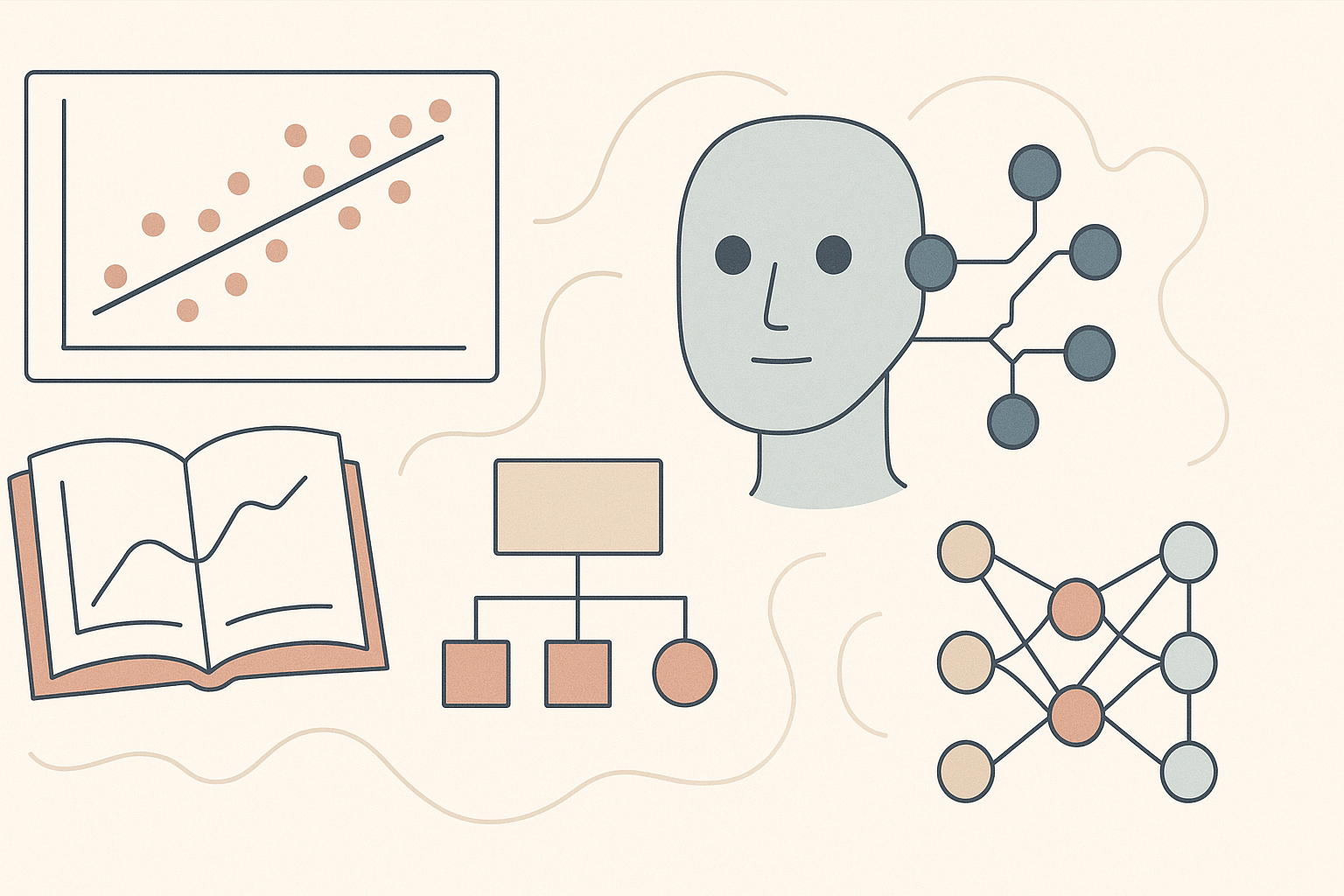
Key concepts in Machine Learning include Supervised Learning, Unsupervised Learning, and Reinforcement Learning. These concepts form the foundation of machine learning and are used to develop algorithms that can learn from data. Linear Regression and Decision Trees are two popular algorithms used in machine learning. The Scikit-learn library is a widely used tool for implementing machine learning algorithms. Python is the most commonly used programming language for machine learning, due to its simplicity and the availability of libraries like TensorFlow and PyTorch.
📈 Deep Learning: A Subdiscipline of Machine Learning
Deep learning, a subdiscipline of Machine Learning, has allowed neural networks to surpass many previous machine learning approaches in performance. Deep Learning algorithms are capable of learning complex patterns in data, making them particularly useful for tasks like Image Recognition and Natural Language Processing. The AlexNet and VGG16 models are two notable examples of deep learning architectures. Convolutional Neural Networks and Recurrent Neural Networks are two types of neural networks commonly used in deep learning. The ImageNet dataset is a widely used benchmark for evaluating the performance of deep learning models.
🤝 Relationship Between Machine Learning and Artificial Intelligence
The relationship between Machine Learning and Artificial Intelligence is complex and multifaceted. While machine learning is a subset of artificial intelligence, it has become a crucial aspect of AI research. AI Research has been driven by advances in machine learning, and the two fields are often used interchangeably. However, artificial intelligence encompasses a broader range of topics, including Computer Vision, Natural Language Processing, and Robotics. The Dartmouth Conference is considered the birthplace of artificial intelligence, and it has had a significant impact on the development of machine learning.
📊 Applications of Machine Learning
The applications of Machine Learning are diverse and widespread. From Image Recognition to Natural Language Processing, machine learning has become an essential tool for many industries. Google's AlphaGo and Facebook's Facial Recognition are two notable examples of machine learning in action. The Healthcare and Finance industries have also seen significant benefits from the use of machine learning. Predictive Maintenance and Credit Risk Assessment are two examples of machine learning applications in these industries.
🚀 Future of Machine Learning
The future of Machine Learning is exciting and uncertain. As the field continues to evolve, we can expect to see significant advances in areas like Explainable AI and Transfer Learning. The AI for Social Good movement is also gaining traction, with many researchers exploring the potential of machine learning to drive positive social change. Andrew Ng's AI Fund is one example of an initiative that aims to support AI research and development. The Stanford University and MIT are also at the forefront of AI research, with many notable researchers and faculty members.
🔒 Challenges and Limitations of Machine Learning
Despite the many advances in Machine Learning, there are still significant challenges and limitations to be addressed. Bias in AI and Explainability are two major concerns, as machine learning models can perpetuate existing biases and be difficult to interpret. The Fairness and Transparency of machine learning models are also crucial issues that need to be addressed. Regulation of AI is another important topic, as governments and organizations seek to establish guidelines and standards for the development and deployment of machine learning models.
📚 Machine Learning Tools and Techniques
There are many tools and techniques available for Machine Learning, from Scikit-learn to TensorFlow. Python is the most commonly used programming language for machine learning, due to its simplicity and the availability of libraries like PyTorch. The Jupyter Notebook is a popular tool for data science and machine learning, allowing researchers to easily share and reproduce their work. GitHub is also a crucial platform for machine learning, providing a space for researchers to share and collaborate on code.
👥 Key Players in the Machine Learning Field
The Machine Learning field is driven by a community of researchers and practitioners who are passionate about advancing the state of the art. Andrew Ng and Yann LeCun are two prominent researchers who have made significant contributions to the field. The Stanford University and MIT have also played a crucial role in shaping the field of machine learning, with many notable researchers and faculty members. Google and Microsoft are two companies that have invested heavily in AI research, with many notable researchers and engineers working on machine learning projects.
💡 Machine Learning and Society
The impact of Machine Learning on society is significant and far-reaching. From Job Displacement to Bias in AI, there are many concerns that need to be addressed. The AI for Social Good movement is one example of an initiative that aims to support AI research and development that benefits society. Andrew Ng's AI Fund is another example of an initiative that aims to support AI research and development. The Stanford University and MIT are also at the forefront of AI research, with many notable researchers and faculty members.
📊 Conclusion: The Pulse of Artificial Intelligence
In conclusion, Machine Learning is a rapidly evolving field that has the potential to transform many aspects of our lives. From Image Recognition to Natural Language Processing, machine learning has become an essential tool for many industries. As the field continues to evolve, we can expect to see significant advances in areas like Explainable AI and Transfer Learning. The AI for Social Good movement is also gaining traction, with many researchers exploring the potential of machine learning to drive positive social change.
Key Facts
- Year
- 1950
- Origin
- Dartmouth Summer Research Project
- Category
- Artificial Intelligence
- Type
- Concept
Frequently Asked Questions
What is machine learning?
Machine learning is a field of study in artificial intelligence concerned with the development and study of statistical algorithms that can learn from data and generalize to unseen data. This allows machines to perform tasks without explicit programming language instructions. Machine learning has become a crucial aspect of data science, enabling computers to make predictions, classify objects, and make decisions. The field of machine learning has been influenced by computer vision and natural language processing.
What are the key concepts in machine learning?
Key concepts in machine learning include supervised learning, unsupervised learning, and reinforcement learning. These concepts form the foundation of machine learning and are used to develop algorithms that can learn from data. Linear regression and decision trees are two popular algorithms used in machine learning. The scikit-learn library is a widely used tool for implementing machine learning algorithms.
What is deep learning?
Deep learning is a subdiscipline of machine learning that has allowed neural networks to surpass many previous machine learning approaches in performance. Deep learning algorithms are capable of learning complex patterns in data, making them particularly useful for tasks like image recognition and natural language processing. The AlexNet and VGG16 models are two notable examples of deep learning architectures.
What are the applications of machine learning?
The applications of machine learning are diverse and widespread. From image recognition to natural language processing, machine learning has become an essential tool for many industries. Google's AlphaGo and Facebook's Facial Recognition are two notable examples of machine learning in action. The healthcare and finance industries have also seen significant benefits from the use of machine learning.
What is the future of machine learning?
The future of machine learning is exciting and uncertain. As the field continues to evolve, we can expect to see significant advances in areas like explainable AI and transfer learning. The AI for Social Good movement is also gaining traction, with many researchers exploring the potential of machine learning to drive positive social change. Andrew Ng's AI Fund is one example of an initiative that aims to support AI research and development.
What are the challenges and limitations of machine learning?
Despite the many advances in machine learning, there are still significant challenges and limitations to be addressed. Bias in AI and explainability are two major concerns, as machine learning models can perpetuate existing biases and be difficult to interpret. The fairness and transparency of machine learning models are also crucial issues that need to be addressed. Regulation of AI is another important topic, as governments and organizations seek to establish guidelines and standards for the development and deployment of machine learning models.
What are the tools and techniques available for machine learning?
There are many tools and techniques available for machine learning, from scikit-learn to TensorFlow. Python is the most commonly used programming language for machine learning, due to its simplicity and the availability of libraries like PyTorch. The Jupyter Notebook is a popular tool for data science and machine learning, allowing researchers to easily share and reproduce their work. GitHub is also a crucial platform for machine learning, providing a space for researchers to share and collaborate on code.