
Contents
- 🤖 Introduction to Machine Learning Algorithms
- 📊 Supervised Learning: The Foundation of Machine Learning
- 📈 Unsupervised Learning: Discovering Hidden Patterns
- 🤝 Semi-Supervised Learning: Combining the Best of Both Worlds
- 📊 Reinforcement Learning: Learning from Trial and Error
- 📈 Deep Learning: A Subset of Machine Learning
- 📊 Neural Networks: The Building Blocks of Deep Learning
- 📈 Natural Language Processing: The Intersection of AI and Human Language
- 📊 Computer Vision: Enabling Machines to See and Understand
- 🤖 Ethics in Machine Learning: Addressing Bias and Fairness
- 📈 The Future of Machine Learning: Emerging Trends and Applications
- 📊 Real-World Applications of Machine Learning: Success Stories and Challenges
- Frequently Asked Questions
- Related Topics
Overview
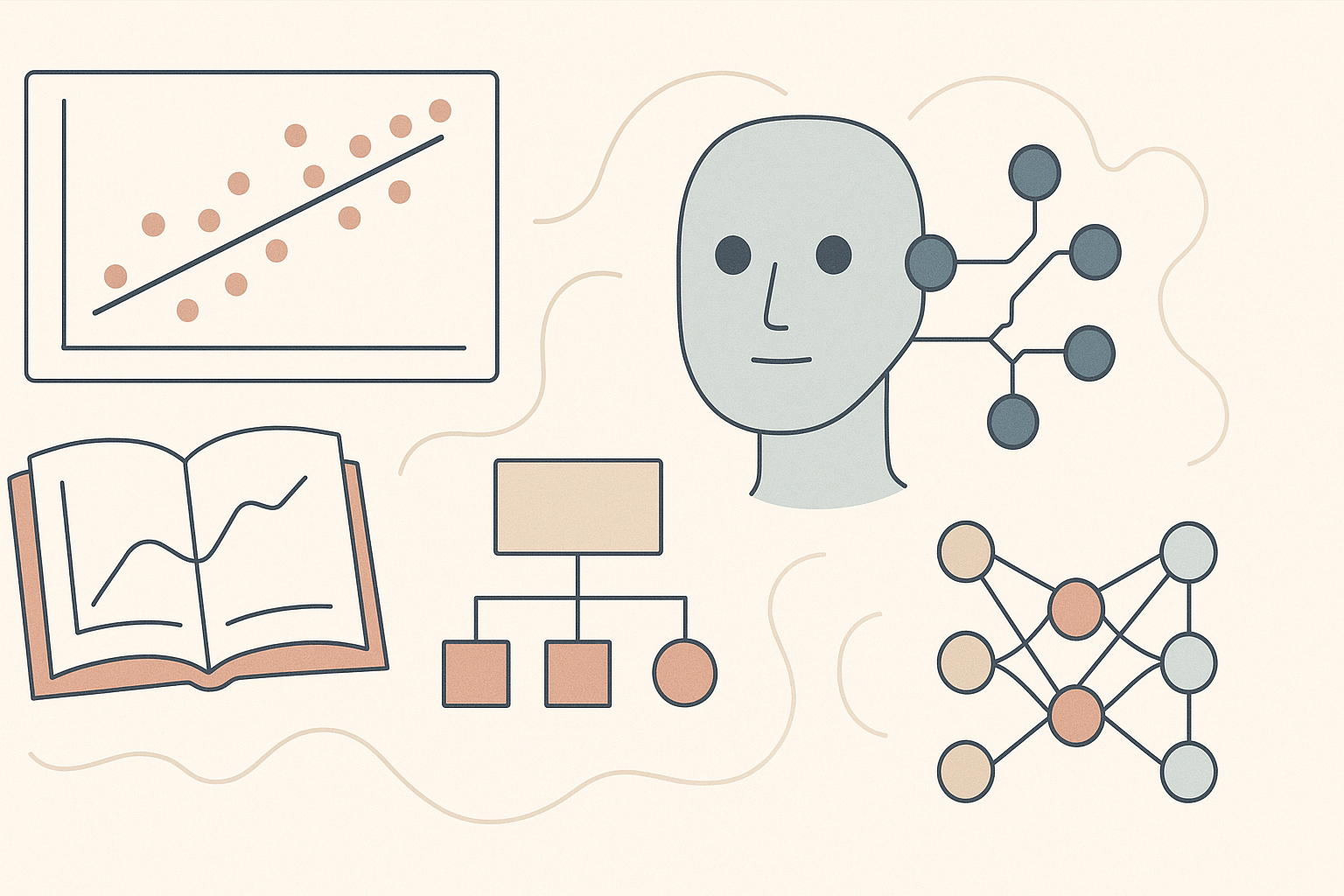
Machine learning algorithms, with a vibe score of 85, have been a cornerstone of artificial intelligence since the 1950s, when pioneers like Alan Turing and Marvin Minsky laid the groundwork. Today, these algorithms, such as decision trees, random forests, and neural networks, are used in everything from image recognition to natural language processing. However, skeptics like Andrew Ng and Yann LeCun question the limitations and potential biases of these algorithms. As the field continues to evolve, engineers like Fei-Fei Li are working to develop more transparent and explainable models. With the global machine learning market projected to reach $8.8 billion by 2025, the stakes are high, and the future of ML is likely to be shaped by the tension between innovation and accountability. As we move forward, it's essential to consider the influence flows between key players like Google, Facebook, and Amazon, and how they will impact the development of ML algorithms.
🤖 Introduction to Machine Learning Algorithms
Machine learning algorithms are the pulse of AI, enabling machines to learn from data and improve their performance over time. As discussed in Machine Learning, these algorithms can be broadly categorized into Supervised Learning, Unsupervised Learning, and Reinforcement Learning. The goal of machine learning is to develop algorithms that can learn from data and make predictions or decisions with minimal human intervention. For instance, Deep Learning techniques have been successfully applied in Image Recognition and Natural Language Processing. However, as noted by Andrew Ng, the founder of Coursera, the key to successful machine learning is to have a large amount of high-quality training data.
📊 Supervised Learning: The Foundation of Machine Learning
Supervised learning is a type of machine learning where the algorithm is trained on labeled data, allowing it to learn the relationship between the input and output. As explained in Supervised Learning, this type of learning is commonly used in Regression Analysis and Classification problems. For example, Support Vector Machines can be used for classification, while Linear Regression can be used for regression. The goal of supervised learning is to develop algorithms that can make accurate predictions on new, unseen data. As discussed in Pattern Recognition, supervised learning is widely used in Computer Vision and Speech Recognition. However, as noted by Yann LeCun, the director of Facebook AI, supervised learning requires a large amount of labeled data, which can be time-consuming and expensive to obtain.
🤝 Semi-Supervised Learning: Combining the Best of Both Worlds
Semi-supervised learning combines the benefits of supervised and unsupervised learning, where the algorithm is trained on a combination of labeled and unlabeled data. As explained in Semi-Supervised Learning, this type of learning is commonly used in Image Classification and Text Classification. For example, Self-Supervised Learning can be used to learn representations of images and text, while Active Learning can be used to select the most informative samples for labeling. The goal of semi-supervised learning is to develop algorithms that can learn from both labeled and unlabeled data. As discussed in Machine Learning for Healthcare, semi-supervised learning is widely used in Medical Image Analysis and Clinical Text Analysis. However, as noted by Fei-Fei Li, the director of Stanford AI Lab, semi-supervised learning requires careful selection of the labeled and unlabeled data.
📊 Reinforcement Learning: Learning from Trial and Error
Reinforcement learning is a type of machine learning where the algorithm learns from trial and error by interacting with an environment. As explained in Reinforcement Learning, this type of learning is commonly used in Game Playing and Robotics. For instance, Q-Learning can be used to learn the optimal policy in a Markov Decision Process, while Deep Reinforcement Learning can be used to learn complex behaviors in Video Games. The goal of reinforcement learning is to develop algorithms that can learn from feedback and adapt to changing environments. As discussed in Autonomous Vehicles, reinforcement learning is widely used in Self-Driving Cars and Drone Control. However, as noted by David Silver, the lead researcher of AlphaGo, reinforcement learning can be challenging, as it requires the algorithm to balance exploration and exploitation.
📈 Deep Learning: A Subset of Machine Learning
Deep learning is a subset of machine learning that uses neural networks to learn complex patterns in data. As explained in Deep Learning, this type of learning is commonly used in Image Recognition and Natural Language Processing. For example, Convolutional Neural Networks can be used for image recognition, while Recurrent Neural Networks can be used for natural language processing. The goal of deep learning is to develop algorithms that can learn complex representations of data. As discussed in Computer Vision, deep learning is widely used in Object Detection and Image Segmentation. However, as noted by Yoshua Bengio, a pioneer in Deep Learning, deep learning requires large amounts of computational resources and data.
📊 Neural Networks: The Building Blocks of Deep Learning
Neural networks are the building blocks of deep learning, consisting of layers of interconnected nodes or neurons. As explained in Neural Networks, these networks can be trained to learn complex patterns in data. For instance, Feedforward Neural Networks can be used for image recognition, while Autoencoders can be used for dimensionality reduction. The goal of neural networks is to develop algorithms that can learn complex representations of data. As discussed in Natural Language Processing, neural networks are widely used in Language Translation and Text Summarization. However, as noted by Geoffrey Hinton, neural networks can be challenging to train, as they require careful selection of hyperparameters and optimization algorithms.
📈 Natural Language Processing: The Intersection of AI and Human Language
Natural language processing is the intersection of AI and human language, enabling machines to understand and generate human language. As explained in Natural Language Processing, this field is commonly used in Language Translation and Text Summarization. For example, Recurrent Neural Networks can be used for language modeling, while Transformers can be used for language translation. The goal of natural language processing is to develop algorithms that can understand and generate human language. As discussed in Chatbots, natural language processing is widely used in Customer Service and Virtual Assistants. However, as noted by Christopher Manning, a pioneer in Natural Language Processing, natural language processing can be challenging, as it requires the algorithm to understand the nuances of human language.
📊 Computer Vision: Enabling Machines to See and Understand
Computer vision is the field of AI that enables machines to see and understand visual data from the world. As explained in Computer Vision, this field is commonly used in Object Detection and Image Segmentation. For instance, Convolutional Neural Networks can be used for image recognition, while Region Proposal Networks can be used for object detection. The goal of computer vision is to develop algorithms that can understand and interpret visual data. As discussed in Autonomous Vehicles, computer vision is widely used in Self-Driving Cars and Drone Control. However, as noted by Fei-Fei Li, computer vision can be challenging, as it requires the algorithm to understand the complexities of visual data.
🤖 Ethics in Machine Learning: Addressing Bias and Fairness
Ethics in machine learning is a critical topic, as it requires addressing issues of bias and fairness in AI systems. As explained in Ethics in Machine Learning, this field is concerned with ensuring that AI systems are fair, transparent, and accountable. For example, Bias Detection can be used to identify biases in AI systems, while Fairness Metrics can be used to evaluate the fairness of AI systems. The goal of ethics in machine learning is to develop algorithms that are fair and transparent. As discussed in AI for Social Good, ethics in machine learning is widely used in Healthcare and Education. However, as noted by Kate Crawford, a pioneer in Ethics in Machine Learning, ethics in machine learning can be challenging, as it requires careful consideration of the social and cultural context of AI systems.
📈 The Future of Machine Learning: Emerging Trends and Applications
The future of machine learning is exciting, with emerging trends and applications in areas such as Edge AI and Explainable AI. As explained in Future of Machine Learning, this field is concerned with developing algorithms that can learn from data and adapt to changing environments. For instance, Transfer Learning can be used to adapt AI models to new environments, while Meta-Learning can be used to learn how to learn from data. The goal of the future of machine learning is to develop algorithms that can learn from data and adapt to changing environments. As discussed in AI for Business, the future of machine learning is widely used in Marketing and Finance. However, as noted by Andrew Ng, the future of machine learning requires careful consideration of the social and cultural context of AI systems.
📊 Real-World Applications of Machine Learning: Success Stories and Challenges
Real-world applications of machine learning are numerous, with success stories in areas such as Image Recognition and Natural Language Processing. As explained in Real-World Applications of Machine Learning, this field is concerned with developing algorithms that can learn from data and adapt to changing environments. For example, Self-Driving Cars can use machine learning to detect and respond to objects in the environment, while Chatbots can use machine learning to understand and respond to user queries. The goal of real-world applications of machine learning is to develop algorithms that can learn from data and adapt to changing environments. As discussed in AI for Social Good, real-world applications of machine learning are widely used in Healthcare and Education. However, as noted by Yann LeCun, real-world applications of machine learning can be challenging, as they require careful consideration of the social and cultural context of AI systems.
Key Facts
- Year
- 2022
- Origin
- Stanford University
- Category
- Artificial Intelligence
- Type
- Concept
Frequently Asked Questions
What is machine learning?
Machine learning is a type of AI that enables machines to learn from data and improve their performance over time. As discussed in Machine Learning, machine learning can be broadly categorized into Supervised Learning, Unsupervised Learning, and Reinforcement Learning. For instance, Deep Learning techniques have been successfully applied in Image Recognition and Natural Language Processing. However, as noted by Andrew Ng, the founder of Coursera, the key to successful machine learning is to have a large amount of high-quality training data.
What is deep learning?
Deep learning is a subset of machine learning that uses neural networks to learn complex patterns in data. As explained in Deep Learning, this type of learning is commonly used in Image Recognition and Natural Language Processing. For example, Convolutional Neural Networks can be used for image recognition, while Recurrent Neural Networks can be used for natural language processing. The goal of deep learning is to develop algorithms that can learn complex representations of data. As discussed in Computer Vision, deep learning is widely used in Object Detection and Image Segmentation.
What is natural language processing?
Natural language processing is the intersection of AI and human language, enabling machines to understand and generate human language. As explained in Natural Language Processing, this field is commonly used in Language Translation and Text Summarization. For instance, Recurrent Neural Networks can be used for language modeling, while Transformers can be used for language translation. The goal of natural language processing is to develop algorithms that can understand and generate human language. As discussed in Chatbots, natural language processing is widely used in Customer Service and Virtual Assistants.
What is computer vision?
Computer vision is the field of AI that enables machines to see and understand visual data from the world. As explained in Computer Vision, this field is commonly used in Object Detection and Image Segmentation. For example, Convolutional Neural Networks can be used for image recognition, while Region Proposal Networks can be used for object detection. The goal of computer vision is to develop algorithms that can understand and interpret visual data. As discussed in Autonomous Vehicles, computer vision is widely used in Self-Driving Cars and Drone Control.
What is ethics in machine learning?
Ethics in machine learning is a critical topic, as it requires addressing issues of bias and fairness in AI systems. As explained in Ethics in Machine Learning, this field is concerned with ensuring that AI systems are fair, transparent, and accountable. For instance, Bias Detection can be used to identify biases in AI systems, while Fairness Metrics can be used to evaluate the fairness of AI systems. The goal of ethics in machine learning is to develop algorithms that are fair and transparent. As discussed in AI for Social Good, ethics in machine learning is widely used in Healthcare and Education.
What is the future of machine learning?
The future of machine learning is exciting, with emerging trends and applications in areas such as Edge AI and Explainable AI. As explained in Future of Machine Learning, this field is concerned with developing algorithms that can learn from data and adapt to changing environments. For example, Transfer Learning can be used to adapt AI models to new environments, while Meta-Learning can be used to learn how to learn from data. The goal of the future of machine learning is to develop algorithms that can learn from data and adapt to changing environments. As discussed in AI for Business, the future of machine learning is widely used in Marketing and Finance.
What are real-world applications of machine learning?
Real-world applications of machine learning are numerous, with success stories in areas such as Image Recognition and Natural Language Processing. As explained in Real-World Applications of Machine Learning, this field is concerned with developing algorithms that can learn from data and adapt to changing environments. For instance, Self-Driving Cars can use machine learning to detect and respond to objects in the environment, while Chatbots can use machine learning to understand and respond to user queries. The goal of real-world applications of machine learning is to develop algorithms that can learn from data and adapt to changing environments. As discussed in AI for Social Good, real-world applications of machine learning are widely used in Healthcare and Education.